¡Ayuda a la Biblioteca!
Descubrir nuevos libros, catalogarlos y reseñarlos para hacerlos accesibles de forma gratuita requiere un gran esfuerzo. Si quieres apoyar este proyecto, pulsa este botón y haz una donación por la cantidad que quieras:
 |  | 3190-3199 de los 4496 documentos
|  |  |
 | Ebenezer LANDELLS The boy's own toy-maker. A practical illustrated guide D. Appleton & Co, New York 1860 (I ed. 1859). |
|
| Todd LANDMAN Framing Performance Magic: The Role of Contract, Discourse and Effect Journal of Performance Magic, N. 1, Vol. 1, 2013, pp. 47-68. |
|
| Edward William LANE An account of the manners and customs of the modern Egyptians Vol. 1, Charles Knight, London 1836. |
|
| Edward William LANE An account of the manners and customs of the modern Egyptians Vol. 2, Charles Knight, London 1836. |
|
| Edward William LANE An account of the manners and customs of the modern Egyptians Charles Knight, London 1860 (I ed. 1836). |
|
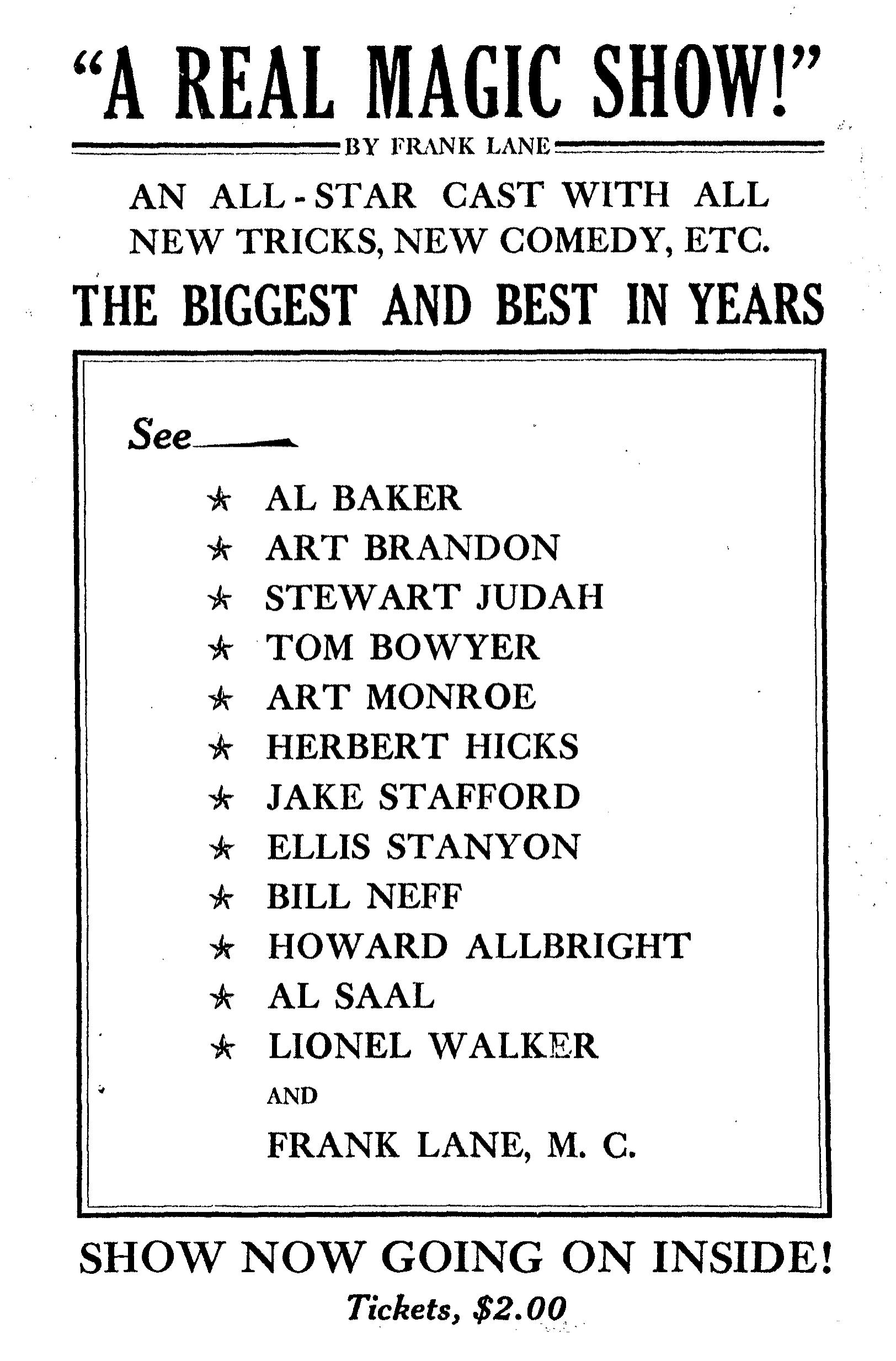 | Frank LANE A real magic show! |
|
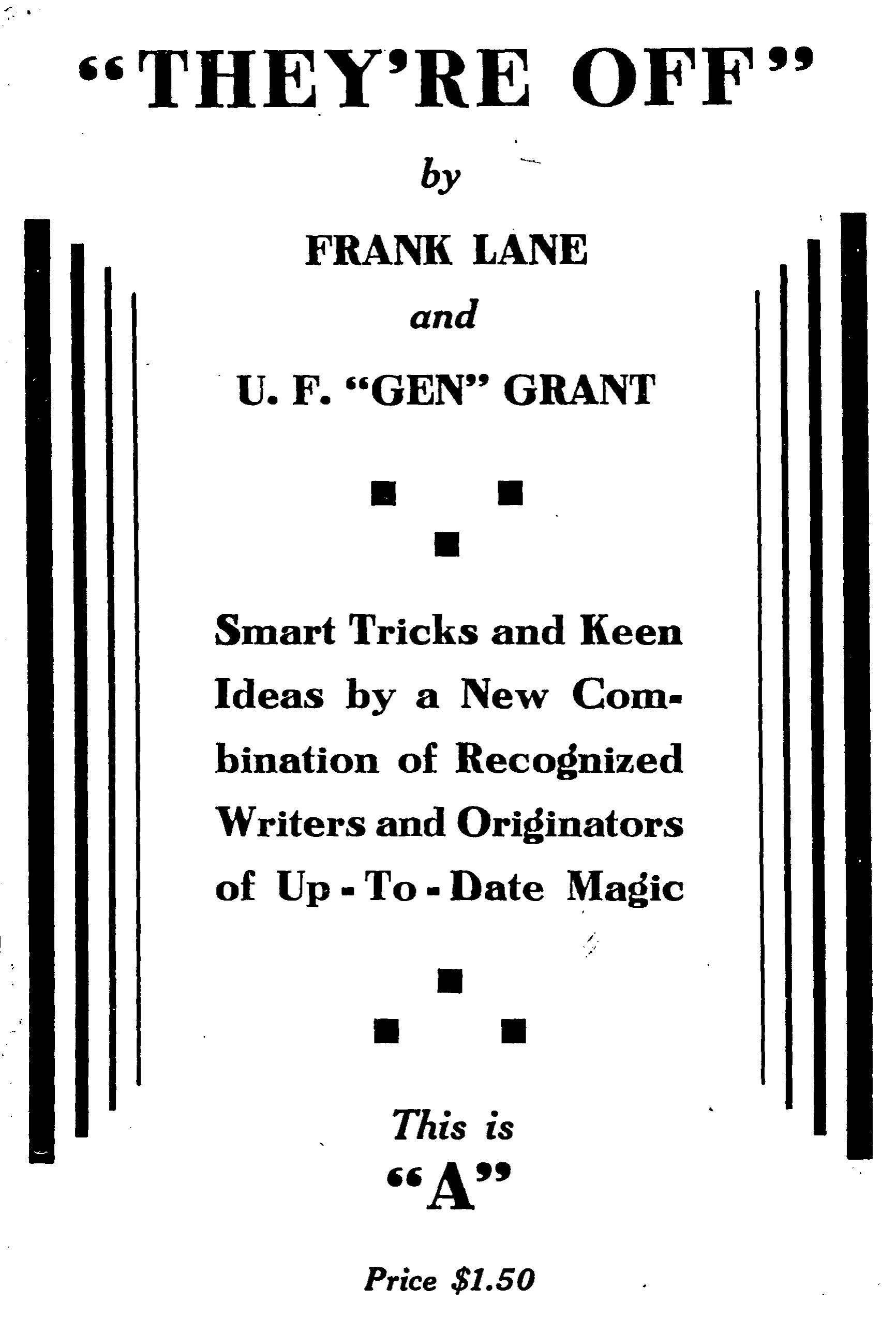 | Frank LANE They're off: smart tricks and keen ideas by a new combination of recognized writers and originators of up-to-date magic 1935. |
|
 | Preston LANGELY HICKEY Practical Drawing Room, Club and Stage Patter F.G. Thayer, Los Angeles 1919. |
|
| Douglas J. LANSKA e Joseph T. LANSKA “Franz Anton Mesmer and the Rise and Fall of Animal Magnetism: Dramatic Cures, Controversy, and Ultimately a Triumph for the Scientific Method” Harry Whitaker, Brain, Mind and Medicine: Essays in Eighteenth-Century Neuroscience, Springer London 2007, pp. 301-320.In the late eighteenth century, Franz Anton Mesmer (1734%u20131815) promulgated animal magnetism as a pervasive property of nature that could be channeled as an effective therapy for a wide variety of conditions. His claims of dramatic therapeutic success were supported by glowing testimonials, in some cases from socially prominent individuals. However, mainstream medical practitioners, professional societies, and political bodies rejected Mesmer and his treatment, and ultimately moved to eliminate Mesmer%u2019s practice and that of his disciples. In retrospect it is clear that traditional physicians in the late eighteenth century had little to offer their patients therapeutically that had any real possibility of benefit, and instead, often harmed their patients with their treatments, whereas Mesmer could demonstrate cases %u201Ccured%u201D by his treatment that had previously failed all conventional approaches. While one might be tempted to dismiss his therapeutic successes as only applicable to hysterical or imagined illness, some of his patients went on to lead quite functional lives when before they were deemed hopeless invalids, a point that even his detractors acknowledged. |
|
 | Williams LARSEN The L.W. mysteries for children 1928. |
|
| | 3190-3199 de los 4496 documentos
| | |

