
«Existence is exalting, as once curiosity is awakened; this exercise of curiosity transforms life into a poetic adventure.»
(Louis Pauwels & Jacques Bergier)
Usually, losing a piece of a puzzle makes it impossible to complete... unless the puzzle can regenerate itself! “Impossible puzzles” are geometric paradoxes that create the illusion that removing a piece does not prevent you from reconstructing the original rectangle. Once you know how to design them, they are easy to make with scissors and cardboard. The challenge lies in illustrating them with images that make the illusion more effective and narratively engaging.
Since nothing is created and nothing is destroyed, the area of the complete puzzle and that of the puzzle with a piece removed are different: for the trick to go unnoticed, the initial and final rectangles must look as nearly identical as possible.
To make impossible puzzles easier to design, I have created an interactive editor. Starting with a rectangular shape, the minimum number of pieces is 3 (which become 2 after one piece is removed). There is no theoretical maximum, since the total number of pieces can be increased simply by dividing any piece as many times as desired.
The editor lets you adjust the various parameters that define the geometry of each puzzle, producing an almost unlimited range of variations.
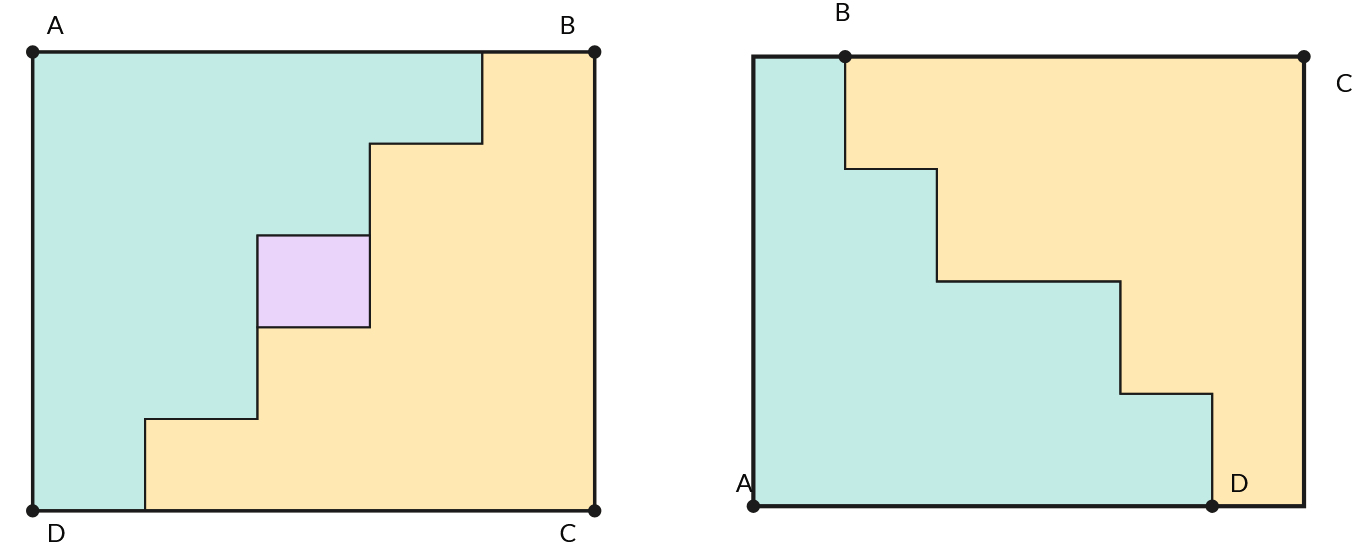
In the 3-piece impossible puzzle, two pieces are stair-shaped, while the removable piece is rectangular. The proportions of the puzzle (identical to those of the extra piece) remain unchanged before and after the central piece is removed and cannot be adjusted. What can be changed is the number of steps.
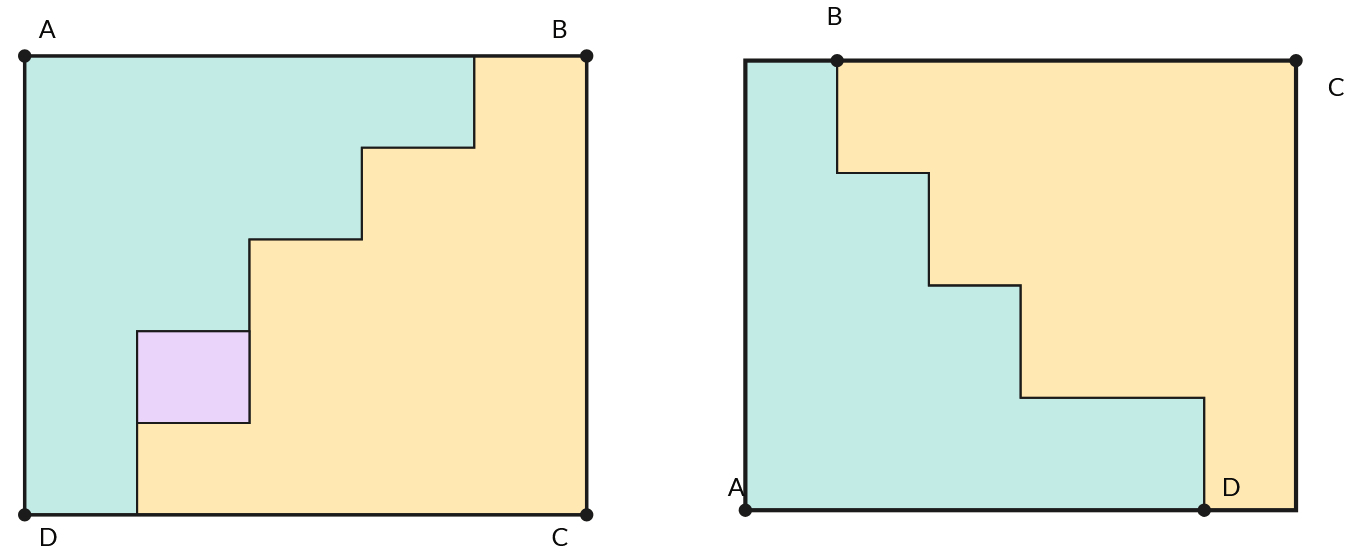
In the default version, the two stair-shaped pieces are identical: if this constraint is removed, the position of the extra piece can be shifted up or down relative to the baseline:
In the most common versions, two different images are printed on the two sides of the puzzle: after the extra piece is removed, the puzzle is reassembled on the other side—and the image seems to be whole again.
In a two-piece variant, the extra piece is not used at all: the pair of stair-shaped pieces shows a solid wall on one side and a wall with a hole in it on the other.
See my version in episode 333 of Mesmer in pillole, “The Impossible Wall”, and the variant in which a piece of a photograph disappears, in episode 338 of Mesmer in pillole, “How to Make the Statue of Liberty Disappear”.
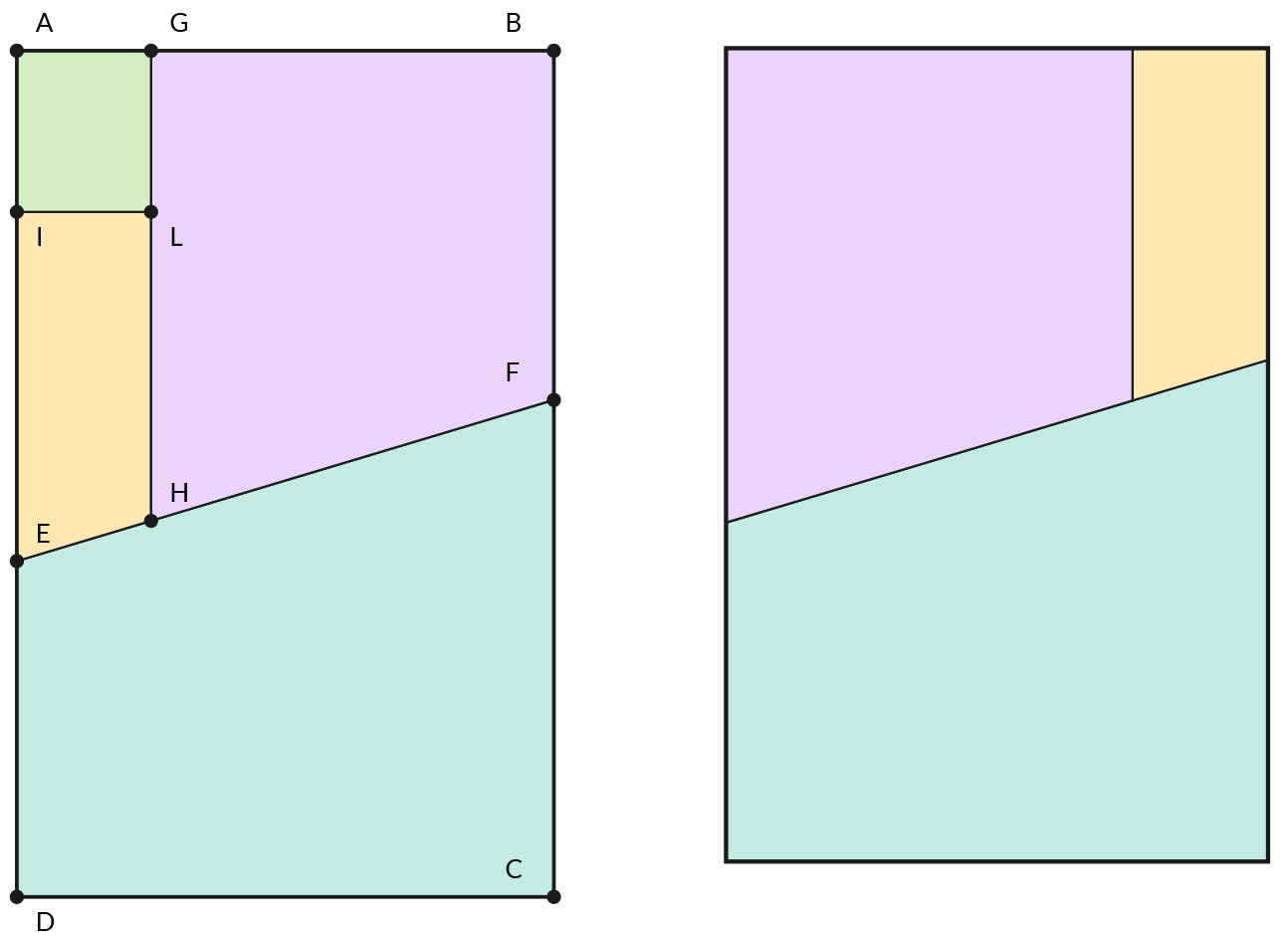
The 4-piece impossible puzzle is the one I am most fond of, having used it in 2013 for my most successful illusion video: “How to Create Chocolate from Nothing”.
Unlike the 3-piece puzzle, here the final rectangle has different proportions from the initial one: one side retains its original length while the other becomes shorter. The proportions of the extra piece can also be adjusted freely, allowing it, for example, to be made square.
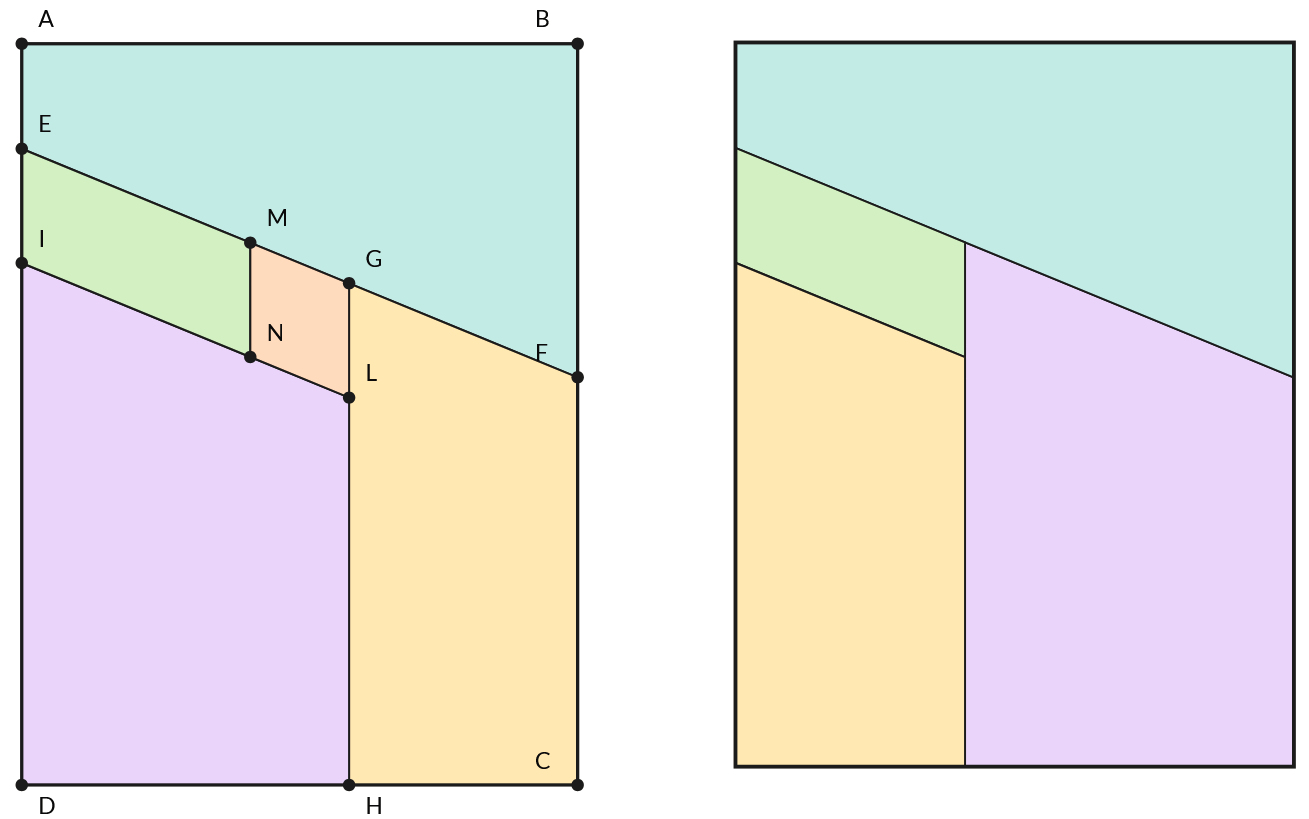
A first version of the 5-piece puzzle allows a non-rectangular parallelogram-shaped extra piece to be removed without apparently affecting the puzzle.
As in the previous puzzle, the final rectangle has different proportions from the initial one: one side retains its original length while the other becomes shorter.
See my version in episode 409 of Mesmer in pillole, “The Miracle of the Broken Chalice”.
All five pieces of the puzzle are quadrilaterals. If this constraint is dropped, the green and light-blue pieces can simply be joined to produce a 4-piece puzzle, one of whose pieces has six sides: for a possible application, see episode 234 of Mesmer in pillole, “The Mystery of the Crystal Skulls”.
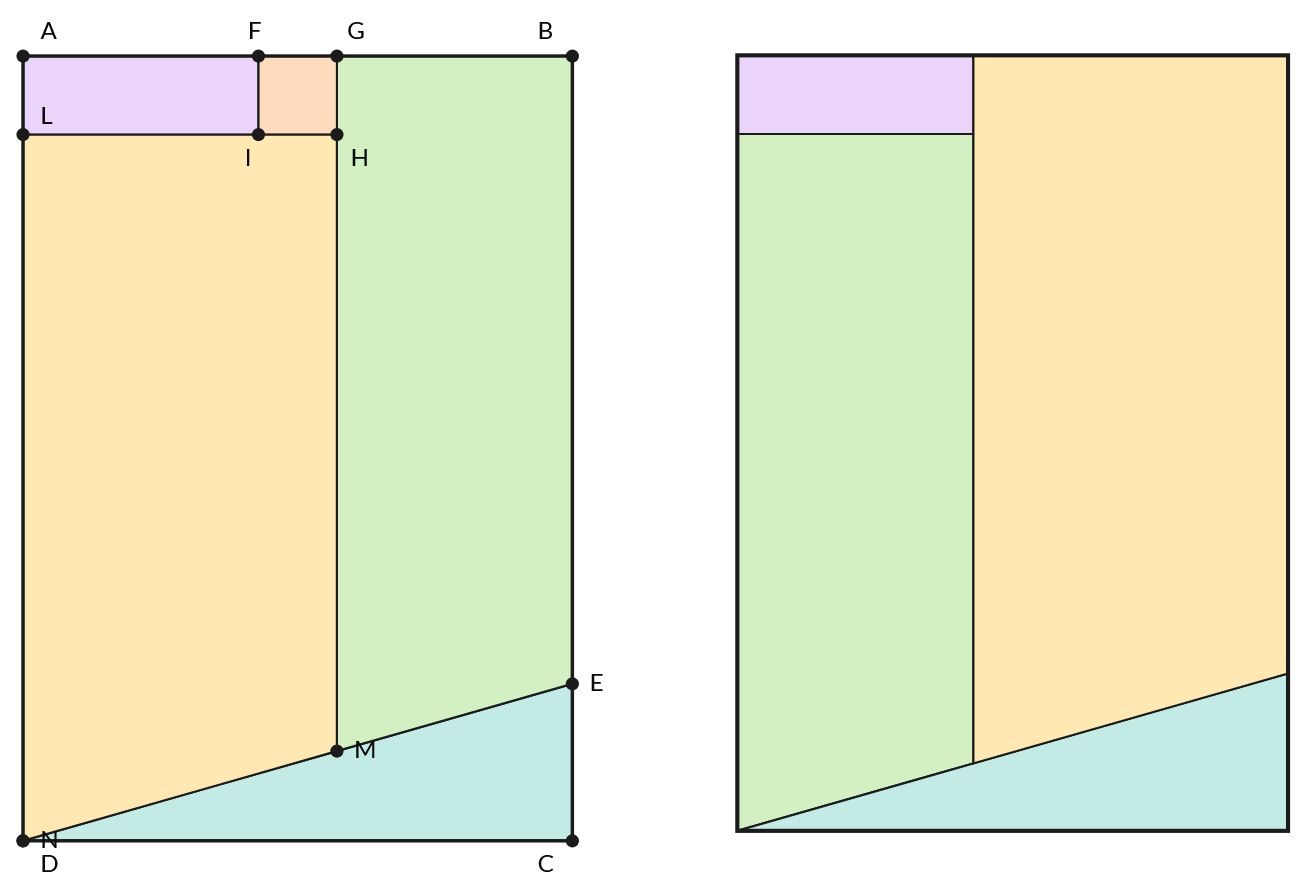
This second version of the 5-piece puzzle allows a rectangular extra piece to be removed without apparently affecting the puzzle. Its proportions can be adjusted freely, allowing it, for example, to be made square. (1) As in the previous puzzle, before and after the removal one side retains its original length while the other becomes shorter.
See my version in episode 412 of Mesmer in pillole, “Flying Saucers and Magic”.
Unlike the previous puzzle, this one does not allow two pieces to be joined to reduce it to a 4-piece puzzle.
The position of the extra piece can be changed: the editor includes an option that can be enabled if you prefer to place it at a corner rather than in the middle of one side.
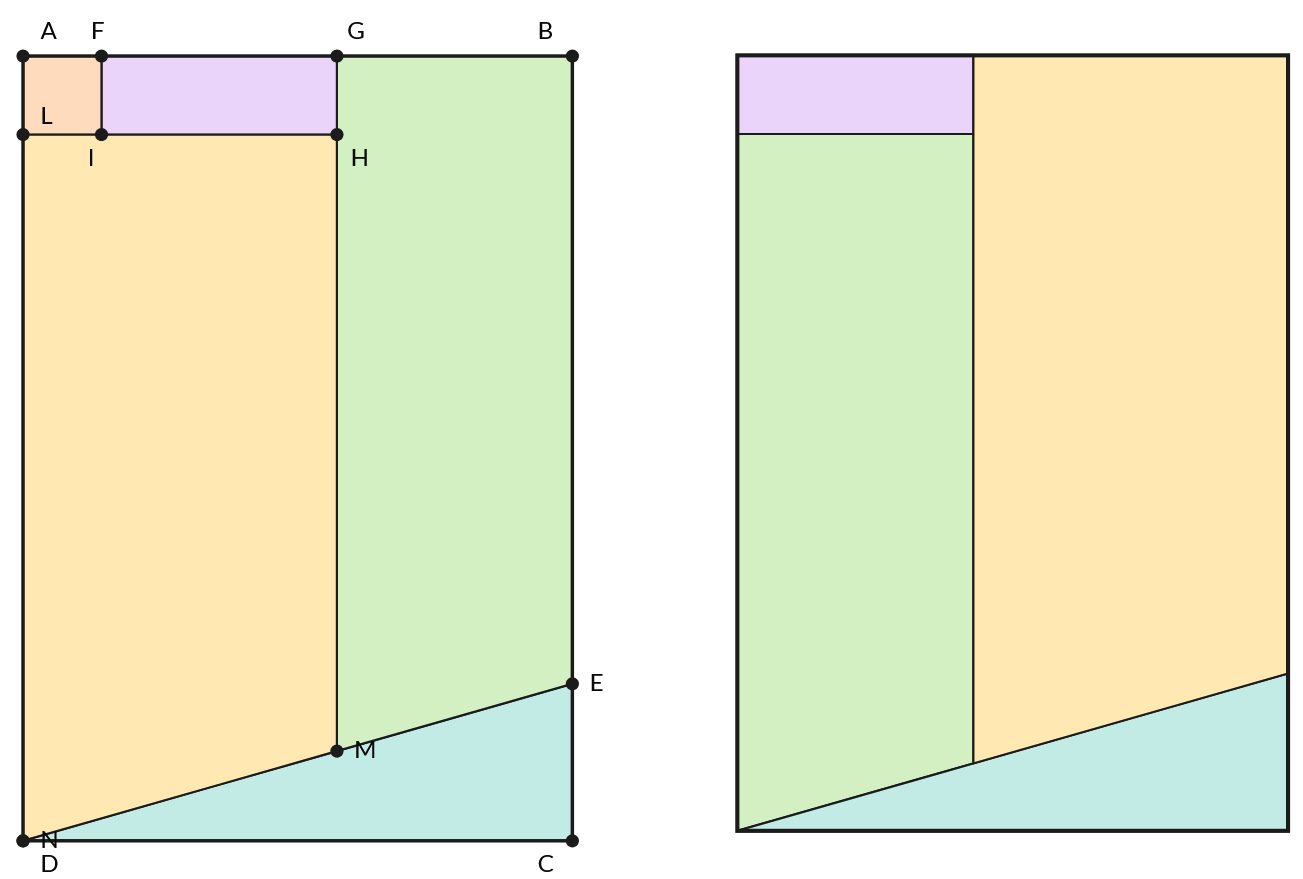
This last configuration is the one used by Mitsunobu Matsuyama in his most famous paradoxical puzzle, published in 1979 in The Chronicles. (2)
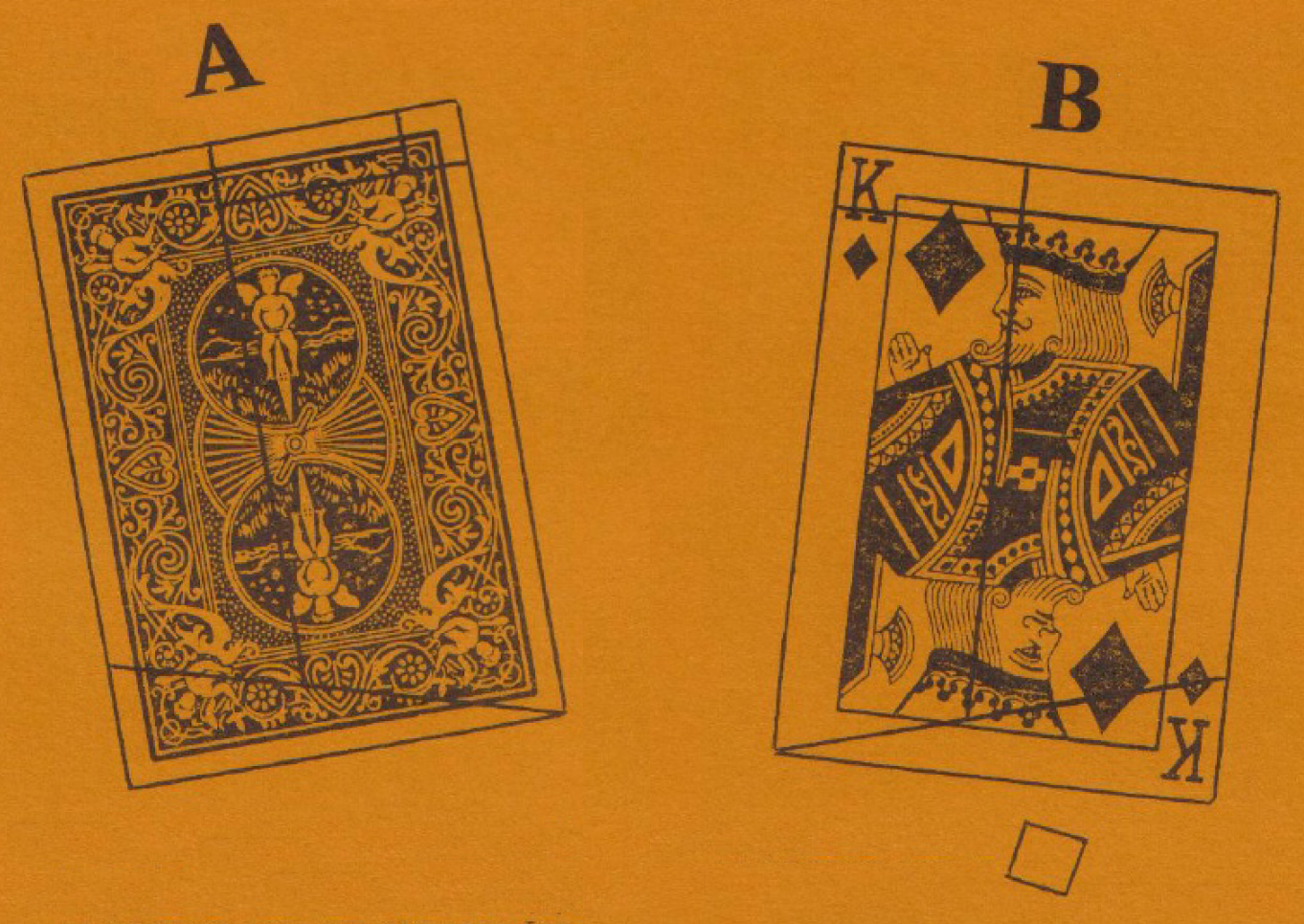
“Mitsunobu Matsuyama’s Paradox” in The Chronicles, n. 18, 1979.
1. See for example Hiroshi Kondo, “Sunflowers facing the sun” (1986) now in Yutaka Nishiyama, “Increasing and Decreasing of Areas” in Osaka Keidai Ronshu, Vol. 59, N. 5, January 2008, fig. 5, p. 19.
2. “Mitsunobu Matsuyama’s Paradox” in The Chronicles, n. 18, 1979.
BY-NC-SA 4.0 • Attribution-NonCommercial-ShareAlike 4.0 International